The compliance trap
As ESG requirements expand, many organisations begin with a defensive question: what must we disclose? That question is necessary, but it is not sufficient. When ESG is treated only as an annual reporting assignment, teams collect data late, responsibilities remain unclear and management receives information after the decisions have already been made.
The result may be a polished report without a reliable operating system. Moving from compliance to practice requires ESG to enter the organisation’s governance cycle: planning, ownership, execution, monitoring, corrective action and management review.
Start with governance, not indicators
Indicators are meaningful only when the organisation understands why they matter, who owns them and how they influence decisions. Effective ESG governance should establish board or leadership oversight, executive sponsorship, cross-functional coordination and accountable data owners.
Material topics should be connected to enterprise risks, strategic objectives and operational processes. A climate target, for example, affects asset decisions, energy use, procurement, supplier engagement, finance and data management. It cannot be owned by the sustainability function alone.
Build an auditable data architecture
ESG information increasingly supports external disclosure, financing, customer requirements and assurance. Each material metric therefore needs a defined boundary, methodology, source, owner, frequency, validation rule and evidence trail. Without these controls, organisations risk inconsistent figures and unsupported claims.
A practical data model should answer six questions: what is measured, why it is material, where the data originates, who is accountable, how it is calculated and what evidence supports the result.
Put carbon credits in the right place
Carbon credits can support a climate strategy, but they should not replace emissions measurement and reduction. The appropriate sequence is to establish a credible greenhouse-gas inventory, improve data quality, identify operational reductions, implement the reduction roadmap and then consider high-integrity credits for residual emissions or defined claims.
Purchasing credits without this foundation can create reputational and assurance risk. Organisations should examine the project methodology, additionality, permanence, leakage, verification, registry status and the wording of any public claim.
From programme to operating discipline
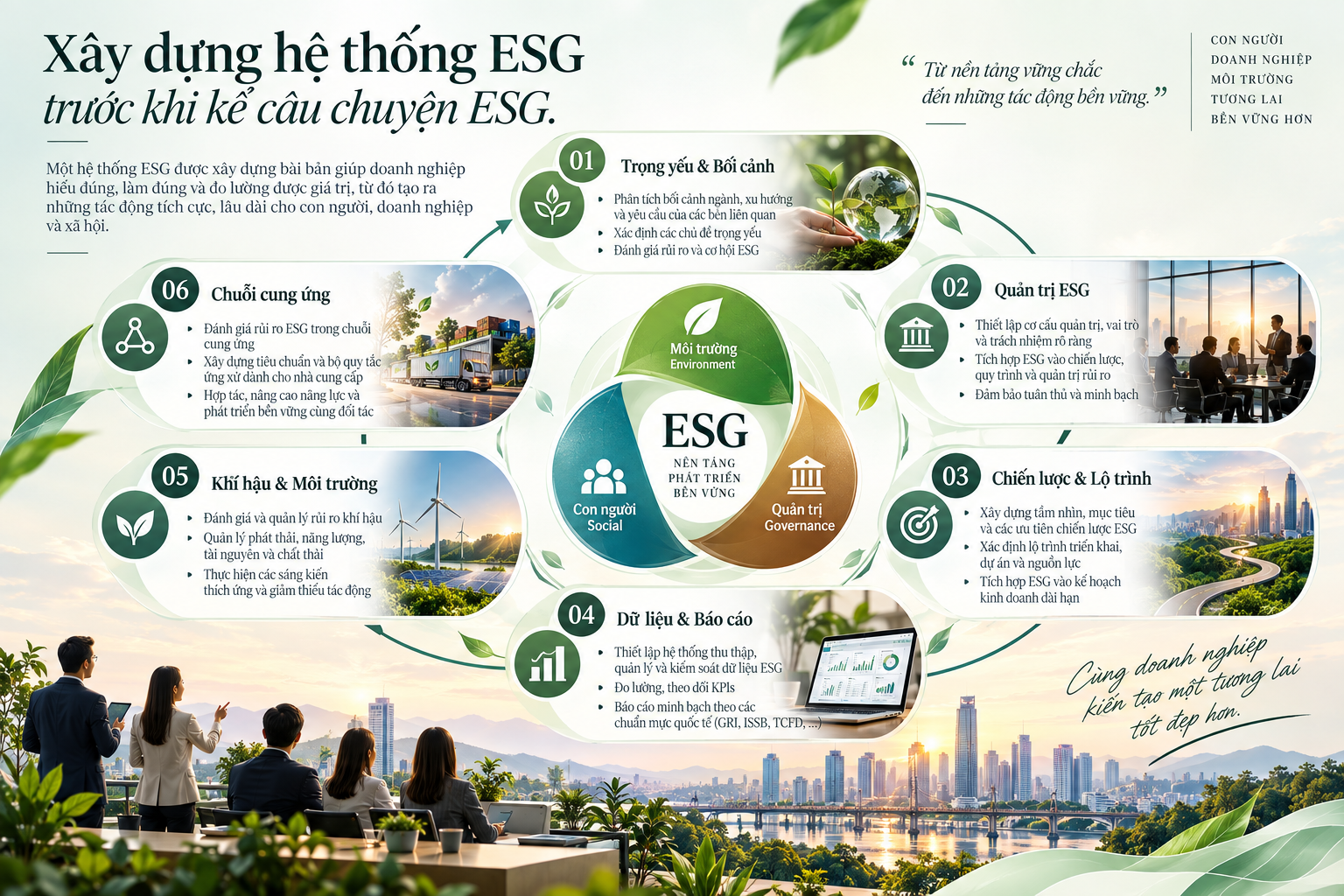
A practical ESG implementation can follow four connected workstreams:
- Governance and materiality: confirm decision rights, stakeholders, material matters and reporting boundaries.
- Strategy and integration: embed priorities into business plans, risk management, procurement and investment decisions.
- Data and controls: build metric registers, calculation protocols, evidence requirements and review controls.
- Performance and assurance readiness: monitor progress, address gaps, conduct internal review and prepare for external assurance where appropriate.
Training must be role-based. Leaders need decision-relevant insight; process owners need responsibilities and controls; data owners need calculation and evidence rules; employees need to understand how daily work contributes to the organisation’s commitments.
What good practice looks like
Mature ESG practice is visible in ordinary management routines: investment proposals consider material sustainability factors; supplier reviews include relevant environmental and social criteria; dashboards show both performance and data quality; corrective actions are tracked; and leadership reviews progress, trade-offs and emerging risks.
The objective is not to create the largest ESG programme. It is to build a proportionate system that produces reliable information, supports better decisions and improves the organisation’s capacity to create sustainable value.
← Return to Insights